A hydraulic issue rarely starts with a complete shutdown. It often starts with a slow lift gate, a wet hose fitting, a pump that sounds louder than usual, or a cylinder that will not hold its position. This truck hydraulic system guide explains what fleet owners and operators need to watch, what causes the most common failures, and when a repair cannot wait.
For work trucks, dump trucks, service bodies, trailers, and equipment haulers, hydraulics are not an accessory. They move loads, operate lifting equipment, power attachments, and keep crews productive. When the system loses pressure or leaks fluid, the truck may still run, but it may not be able to do its job safely.
How a Truck Hydraulic System Works
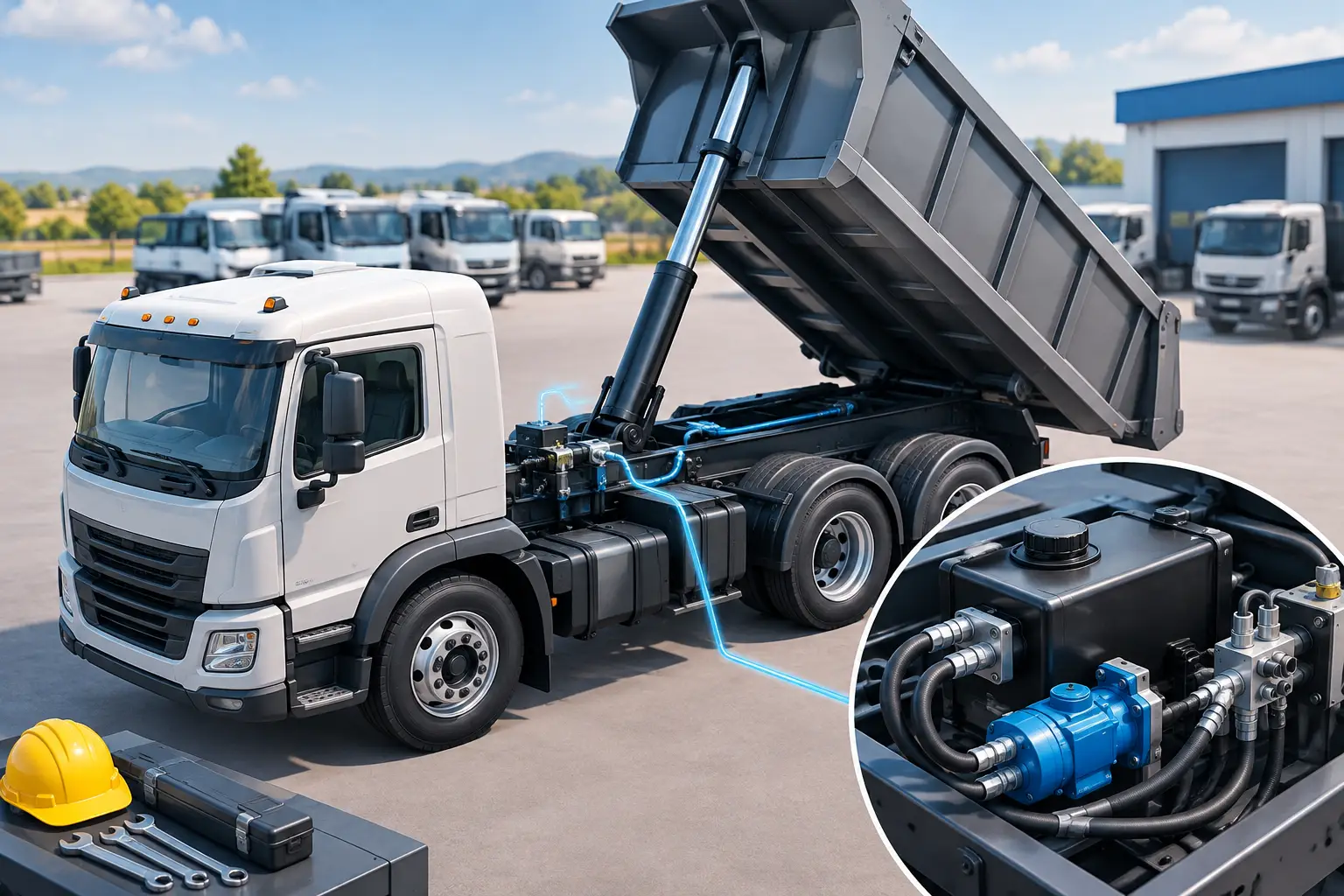
A truck hydraulic system uses pressurized fluid to create mechanical force. The engine, PTO, or an electric motor drives a hydraulic pump. That pump pulls fluid from the reservoir and sends it through hoses, valves, and filters to a cylinder or hydraulic motor. The cylinder extends or retracts to lift, tilt, open, close, or stabilize a component.
The basic system is straightforward, but each part depends on the others. The reservoir must contain clean fluid at the correct level. The pump must receive fluid without air entering the suction side. Hoses and fittings must hold pressure. Valves must direct flow correctly, and cylinders must seal internally and externally. A problem at any one point can show up as slow operation, erratic movement, heat, noise, or a complete loss of function.
Hydraulic oil is part of the working system, not just a lubricant. It transfers power, carries heat away from components, and protects surfaces from wear. Using the wrong viscosity or running contaminated fluid can shorten the life of pumps, valves, and cylinders quickly.
The Components That Need the Most Attention
Hoses and fittings are the most visible failure points. Road debris, heat, vibration, abrasion, and improper routing can damage a hose long before it bursts. Look for wet spots, cracked outer covers, rubbing, loose fittings, and hose clamps that allow too much movement.
Hydraulic cylinders also deserve close attention. A leaking rod seal is easy to spot, but internal bypass is less obvious. When internal seals fail, fluid moves past the piston inside the cylinder instead of building useful force. A dump body may drift down, a lift gate may settle under load, or an attachment may move slowly even though the pump is operating.
Pumps can fail from contaminated oil, low fluid, excessive heat, or cavitation. Cavitation happens when the pump does not receive a solid supply of fluid, often because of a restricted suction line, clogged strainer, low reservoir level, or air leak. It can sound like whining, growling, or gravel moving through the system. Continued operation can damage the pump fast.
Control valves and PTO systems create their own set of concerns. A sticking valve may cause an attachment to move only one direction or not respond consistently. A PTO that will not engage may look like a hydraulic problem, but the root cause could be electrical, pneumatic, mechanical, or a control issue.
Truck Hydraulic System Guide: Warning Signs to Act On
Do not wait for a hose to burst at a job site to investigate a hydraulic concern. Operators who use the truck every day are usually the first to notice that something has changed. That information is valuable and should be documented before a minor issue becomes an out-of-service repair.
Pay attention to these conditions:
- Slow, weak, or jerky lifting and lowering
- Hydraulic fluid under the truck, body, lift gate, or trailer
- Whining, banging, or unusually loud pump noise
- A cylinder that drifts, will not hold a load, or moves unevenly
- Foamy, milky, dark, or burnt-smelling hydraulic fluid
- Excessive heat at the reservoir, pump, hoses, or valve body
A slow function does not always mean the pump has failed. Low fluid, a clogged filter, a pressure relief valve issue, an internal cylinder leak, or a restricted line can create similar symptoms. Replacing parts based on a guess is expensive. A proper diagnosis checks fluid condition, pressure, flow, visible leaks, electrical controls, and the operation of the affected component.
Hydraulic fluid under pressure can penetrate skin and cause serious injury. Never use your hand to search for a suspected high-pressure leak. Shut down the equipment, relieve pressure according to the manufacturer procedure, and have the system inspected with the proper tools.
Preventive Maintenance That Protects Uptime
The best hydraulic repair is the one that happens before a crew is stuck with a loaded truck or disabled lift gate. A practical maintenance plan does not need to be complicated, but it needs to be consistent.
Start with daily walk-around inspections for trucks that operate hydraulic equipment often. Check the reservoir level with the equipment in the manufacturer-recommended position. Inspect the ground for new leaks, look over exposed hoses and fittings, and check cylinder rods for damage, corrosion, or oil accumulation. A nicked rod can destroy a new seal if the underlying damage is not corrected.
At scheduled service intervals, inspect hose routing and clamps, verify filter condition, and review the fluid service history. Replace filters and fluid based on the truck or equipment manufacturer schedule, operating conditions, and fluid analysis when appropriate. Trucks working in heat, sand, standing water, or dusty construction environments may need more frequent attention than trucks running paved routes.
Cleanliness matters during every hydraulic service. Dirt introduced while topping off a reservoir or replacing a hose can circulate through the system and damage precision components. Use the specified fluid, keep fill areas clean, cap open lines, and avoid mixing fluids unless the manufacturer confirms compatibility.
Temperature is another maintenance indicator. Hydraulic systems naturally warm up under load, but excessive heat breaks down fluid and hardens seals. If a system suddenly runs hot, do not treat it as normal because the truck still works. Restricted flow, an incorrect relief setting, low fluid, a failing cooler, or internal leakage can be driving the temperature up.
Repair or Replace? Making the Practical Call
A leaking hose with visible abrasion is usually a direct replacement decision. A damaged hose is not a place to stretch service life. The right replacement must meet the system pressure rating, use correct fittings, and be routed to prevent the same failure from returning.
Cylinder decisions depend on the condition of the rod, barrel, mounts, and internal components. A reseal may be cost-effective when the cylinder body and rod are in good shape. If the rod is bent, deeply pitted, or scored, or if the barrel is damaged, rebuilding without correcting those issues may only provide a short-term fix.
Pump replacement should follow testing, not assumption. If pressure and flow testing point to pump wear or damage, replacement may be the dependable option. But if the actual issue is a restricted suction line or faulty relief valve, a new pump can be damaged by the same underlying problem.
For fleet managers, the practical question is not simply whether a component can be repaired. It is whether the repair will deliver dependable service for the work cycle ahead. A truck scheduled for daily lifting, hauling, or field service needs a repair that holds up, not one that only gets it through the next job.
When Mobile Hydraulic Service Makes Sense
A hydraulic failure can create more than repair cost. It can tie up an operator, delay materials, leave equipment inaccessible, and require a tow or transport that was not part of the plan. When the truck is safe to work on where it sits, mobile service can reduce those secondary costs.
For fleets across the Florida Panhandle, Mobile Fleet Services can inspect hydraulic leaks, hoses, cylinders, lift gates, PTO-related concerns, and supporting electrical controls at a job site, fleet yard, or roadside location. Some major component rebuilds or extensive repairs may still require shop work, but accurate on-site diagnosis helps make that decision quickly.
Keep a record of hydraulic repairs by unit, including hose replacements, fluid services, recurring leaks, and operating symptoms. Patterns often identify a routing problem, a recurring overload condition, or a component reaching the end of its service life. That record gives you a better basis for scheduling repairs before the truck decides the timing for you.
A clean system, a trained operator, and a prompt response to small changes will protect more than hydraulic components. They protect the day’s schedule, the crew’s safety, and the truck’s ability to keep earning.
