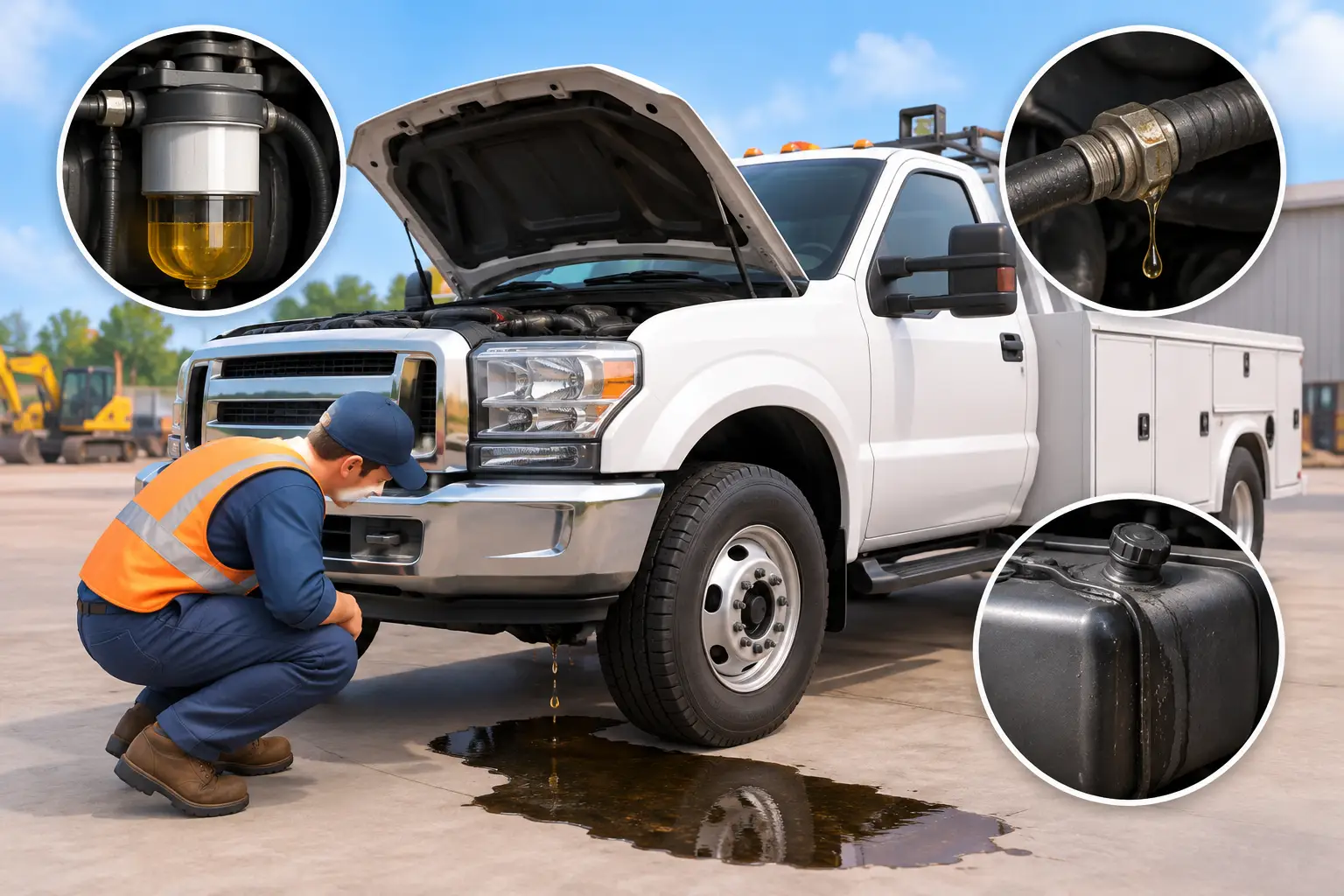
A diesel leak can turn a truck that is still running into a job-stopping problem fast. Fuel on the ground, a growing smell in the cab, or a hard-start condition may look minor at first. For commercial operators, these top diesel leak warning signs are a reason to inspect the vehicle before it becomes a roadside breakdown, a missed delivery, or a safety issue at the job site.
Diesel fuel systems operate under very different pressures depending on where the leak occurs. A seep at a tank fitting may be visible but slow. A leak on the high-pressure side of a common-rail fuel system can be much more serious, even when the amount of visible fuel is small. The goal is not to guess where it is coming from. The goal is to identify the warning signs early, take the truck out of service when needed, and make a proper repair.
Top Diesel Leak Warning Signs to Watch For
Fresh fuel under the truck or equipment
A puddle, wet trail, or damp spot beneath the truck is the most obvious sign. Diesel is usually clear to amber in color and has an oily feel. It does not evaporate as quickly as gasoline, so a fresh leak may leave a shiny, slick-looking area on pavement, concrete, or packed dirt.
Check where the fluid is appearing. Fuel near the tank can point to a damaged tank, sending unit seal, filler neck, vent line, or supply and return connection. Wetness toward the engine may come from fuel filters, lines, injector return hoses, a fuel pump, or fuel rail components. Do not assume every fluid leak is diesel. Engine oil, coolant, hydraulic fluid, and transmission fluid can also collect under a work truck. A technician should confirm the source before parts are replaced.
Strong diesel odor around the cab or truck
A noticeable diesel smell is not normal, especially if it gets stronger after startup, under load, or when the truck is parked. The odor may be coming from an external leak that is reaching the cab through the HVAC intake. It can also indicate a leak in the engine compartment or underneath the vehicle where fuel is contacting hot components.
A fuel smell around a box truck, service body, trailer, or enclosed equipment area deserves attention as well. Even a small leak can create a slippery work surface, contaminate cargo, or become a fire risk if fuel reaches a hot exhaust component. Parking outdoors does not make the issue safe to ignore.
Wet fuel lines, fittings, filters, or injectors
Routine walkarounds catch many leaks before they become major repairs. Look for wetness, staining, or dirt stuck to oily fuel residue around fuel lines, hose connections, filter housings, water separators, injector areas, and the fuel tank.
Fuel residue attracts dust and road grime. That means an older leak may not look like a clean, fresh drip. Instead, it may appear as a dark, greasy buildup around a fitting or line. On equipment and heavy-duty trucks, vibration can loosen connections over time, while heat and age can harden seals and crack flexible hoses.
Never run a hand along a suspected high-pressure fuel line while the engine is operating. High-pressure diesel can penetrate skin and cause a medical emergency. Shut the engine down and have the system inspected using the correct procedures.
Falling fuel level or reduced fuel economy
If a truck is using more fuel than expected but operating conditions have not changed, do not write it off as idle time or a heavier load without checking for a leak. A slow leak from a tank, return line, or fitting may not leave a large puddle every time the vehicle is parked. It may drip only when the tank is full, when the system is pressurized, or when the truck is moving.
Fuel theft is another possibility for fleets, but it should not be the default assumption. Inspect the tank, cap, fuel lines, and nearby components first. Tracking fuel usage by vehicle helps identify unusual consumption early, particularly for fleets with several trucks running similar routes.
Hard starting, rough idle, or loss of power
A diesel fuel leak can allow air into the fuel system. When that happens, the engine may crank longer than usual, stumble after startup, idle rough, hesitate under acceleration, or lose power under load. These symptoms can also come from fuel restrictions, injector issues, weak batteries, sensor faults, or other mechanical problems. That is why a diagnosis matters.
Low-pressure leaks on the supply side are especially likely to create air intrusion. The engine may run normally for a while, then develop a hard-start condition after sitting overnight. If an operator has to prime the fuel system repeatedly, the truck needs attention before it leaves someone stranded at a job site or on a delivery route.
Fuel warning lights or changing engine behavior
A check engine light, low fuel pressure code, or reduced-power condition can be related to a fuel leak, but the warning light alone does not identify the cause. Modern diesel systems rely on accurate fuel pressure to run correctly. A leak, restriction, failing pump, or sensor issue can all trigger similar symptoms.
Treat a warning light with a fuel smell, wet components, or hard starting as a higher-priority concern. Continuing to drive can damage fuel-system components, lead to a no-start condition, or create a more expensive repair than the original leak.
Why Small Diesel Leaks Create Bigger Problems
The immediate concern is lost fuel, but the real cost often comes from downtime. A leak can put a truck out of service during a scheduled route, delay a crew waiting on materials, or leave equipment unavailable when the job is ready to start. Fuel on tires, steps, pavement, or equipment surfaces also creates a slip hazard for drivers and crew members.
There is an environmental side as well. Diesel released onto a customer site, parking lot, roadway, or work area may require cleanup. The right response depends on the amount of fuel and the location, but ignoring the leak is never the lower-cost option.
Leaks near hot engine or exhaust components deserve urgent attention. Diesel has a higher flash point than gasoline, but it can still ignite under the wrong conditions. A fuel leak is not something to monitor for another week while the truck stays in service.
What to Do When You Suspect a Diesel Leak
Start with safety. Park on a level surface when possible, shut the engine down, and keep ignition sources away from the vehicle. Do not crawl underneath a truck supported only by a jack. If fuel is actively dripping, contains a significant amount, or is reaching a hot area, keep the vehicle out of service and arrange for repair.
Document what the driver noticed: where the fluid appeared, whether the tank was recently filled, when the smell occurs, and whether there were starting or power complaints. Those details shorten diagnostic time. A photo of the puddle or wet component can also help, provided it is taken safely.
Avoid temporary fixes such as tape, sealant, or overtightening fittings. Fuel lines and connections need the correct parts, routing, torque, and inspection. A makeshift repair may hold long enough to move the truck, then fail under vibration or pressure.
Keep Leak Checks in Your Maintenance Routine
A quick pre-trip inspection is one of the best ways to prevent a fuel leak from becoming a shutdown. Drivers should look under the truck, check for unusual odors, and report wet fittings or changes in fuel use right away. During scheduled maintenance, inspect fuel filters, lines, clamps, tank straps, filler components, and visible injector-area connections.
The inspection frequency depends on how the vehicle works. Trucks running rough job sites, hauling heavy loads, idling for extended periods, or traveling unpaved roads may need closer attention than lightly used service vehicles. Age matters too. Rubber hoses, seals, and plastic components do not last forever, even when a truck has relatively low mileage.
For fleets across the Florida Panhandle, Mobile Fleet Services can inspect fuel-system concerns at your yard, job site, or breakdown location. Addressing a suspected leak where the truck sits can reduce towing delays and get the right repair moving sooner.
When a driver reports the smell of diesel or sees fuel where it should not be, treat that report as useful information, not a minor inconvenience. Fast action protects the truck, the crew, and the work waiting on the other end of the route.
