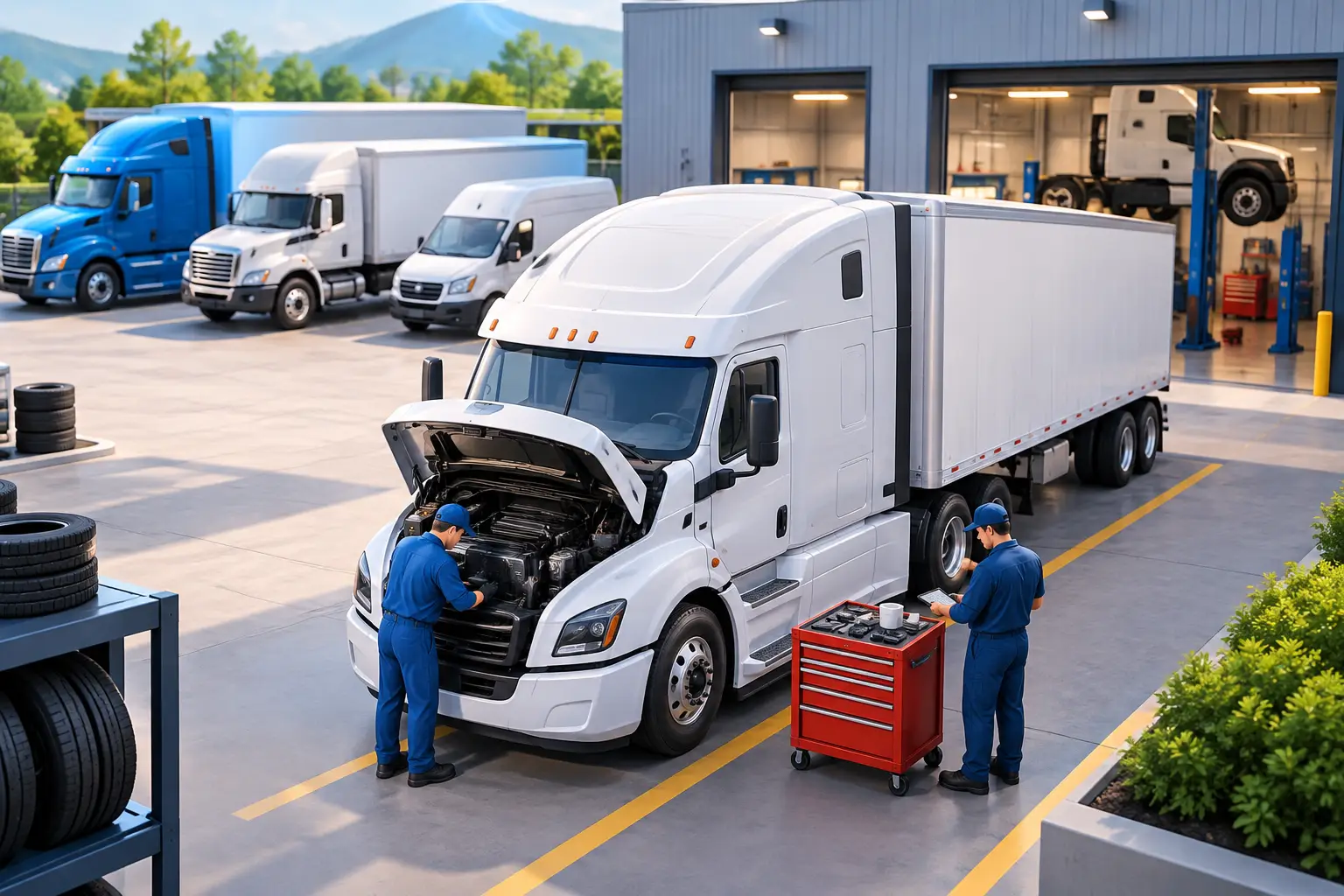
A work truck that will not start at 6:30 a.m. can hold up a crew, delay a delivery, leave equipment stranded, and turn a manageable repair into a lost day. This commercial vehicle maintenance guide is built for fleet owners and operators who need trucks, trailers, and equipment ready when the job starts - not waiting at a repair shop.
Maintenance is not simply changing oil on schedule. It is a system for catching wear before it becomes a roadside failure, organizing repair decisions, and keeping accurate records for every vehicle. The right plan depends on vehicle type, mileage, engine hours, load, route conditions, and how hard the vehicle works. A light-duty service truck and a loaded diesel box truck should not follow the same schedule.
Build a Commercial Vehicle Maintenance Guide Around Use
Start by grouping vehicles by how they are used. Separate heavy-duty diesel trucks, box trucks, work trucks, trailers, and equipment rather than using one blanket checklist. Each group has different failure points and different consequences when it is down.
A vehicle that runs short local routes may accumulate more idle time, stop-and-go wear, and brake use than a truck traveling highway miles. A contractor truck working on sandy or muddy job sites may need more frequent air filter, suspension, tire, and undercarriage inspections. In the Florida Panhandle, heat, humidity, rain, and salt exposure near the coast can also speed up corrosion and put added demand on cooling and electrical systems.
Track both mileage and engine hours. Mileage is useful for oil changes, tires, and drivetrain service. Engine hours matter for idle-heavy trucks, PTO-driven equipment, lift gates, hydraulic systems, and diesel engines that spend long periods operating without traveling far. Use whichever interval comes first, then adjust when inspection findings show the schedule is too loose or unnecessarily frequent.
Start Every Day With a Driver Inspection
Drivers are the first line of defense against unplanned downtime. A daily walk-around takes only a few minutes, but it can identify a leaking hose, damaged tire, low fluid level, loose connection, or trailer issue before the vehicle leaves the yard.
Drivers should report defects immediately, not at the end of the week. A small coolant leak can become an overheating event. A weak battery connection can turn into a no-start call. Brake noise, vibration, steering pull, or an intermittent warning light deserves attention before it becomes a safety issue or a more expensive repair.
A practical daily inspection should cover these areas:
- Tires, wheels, lug nuts, tread condition, and visible sidewall damage
- Engine oil, coolant, fuel, DEF, power steering, and other visible fluid leaks
- Lights, reflectors, mirrors, wipers, horn, backup alarm, and camera systems
- Brakes, air lines, suspension components, couplers, and trailer connections
- Cargo equipment, lift gates, hydraulic lines, roll-up doors, and securement points
The inspection only works if drivers have a simple way to document issues and management has a process for acting on them. A report that sits in a cab or gets lost in a text message does not prevent downtime. Keep defect reports tied to the vehicle number, date, and repair status so nothing falls through the cracks.
Set Service Intervals That Match the Vehicle
Preventive maintenance should include routine fluid and filter service, but it must go further. At each planned service, technicians should inspect the systems most likely to affect safety, reliability, and compliance.
For diesel trucks, that includes the cooling system, belts, hoses, batteries, charging system, air intake, fuel system, exhaust aftertreatment, brakes, steering, suspension, drivetrain, and tire condition. For trailers, focus on brakes, bearings, hubs, tires, lighting, wiring, couplers, landing gear, doors, ramps, and structural condition. Work bodies add their own needs, including lift gates, hydraulic equipment, ladder racks, compressors, and auxiliary electrical circuits.
Do not wait for a dashboard light to schedule service. Warning lights often indicate that a problem has already developed. DPF and emissions faults are a good example. Frequent short trips, excessive idle time, sensor problems, exhaust leaks, or missed maintenance can contribute to regeneration and aftertreatment issues. Early diagnostics can often prevent a derate or no-start condition from taking a truck out of service.
Manufacturer intervals are a starting point, not a complete maintenance program. If a truck operates in severe service, carries heavy loads, idles extensively, or works on rough job sites, shorter intervals may be justified. On the other hand, servicing too early without a reason increases cost and removes vehicles from work unnecessarily. Review repair history and inspection results at least quarterly to make better interval decisions.
Control Small Problems Before They Create Major Repairs
The most costly failures usually give warning signs. Repeated coolant top-offs, slow cranking, uneven tire wear, exhaust smell, hard shifting, brake pull, or a warning light that comes and goes are not normal operating conditions. Treating them as minor inconveniences usually shifts the repair to the worst possible time.
Cooling system failures deserve particular attention in hot weather. Inspect hoses, clamps, belts, fan operation, radiator condition, coolant concentration, and signs of seepage. An overheated diesel can cause engine damage, roadside delays, and a repair bill far beyond the cost of a planned inspection.
Electrical problems also need a disciplined approach. Commercial vehicles often carry added lighting, inverters, cameras, lift gates, GPS equipment, tool chargers, and body controls. Poor grounds, corroded connectors, weak batteries, and overloaded circuits can create intermittent issues that are difficult to diagnose after a failure. Addressing electrical concerns early saves diagnostic time and reduces no-start calls.
Keep Maintenance Records Useful, Not Complicated
A maintenance record should help you make decisions quickly. Track the vehicle number, VIN, mileage or engine hours, service date, inspection findings, repairs completed, parts used, and the next due date. Record repeated issues clearly, especially when they involve the same system.
Good records reveal patterns. If one truck repeatedly needs brake work earlier than the rest of the fleet, look at route conditions, driver habits, load weight, or a mechanical cause. If multiple vehicles are losing batteries, review idle practices, charging performance, and accessory loads. If trailer light repairs keep returning, inspect wiring routes and connector handling instead of replacing bulbs one at a time.
Records are also valuable for DOT inspections, warranty questions, resale planning, and budgeting. More importantly, they let you schedule repairs before they interrupt a crew or a customer commitment.
Plan for Repairs Without Losing the Whole Day
Even a well-maintained fleet will need repairs. The goal is not to eliminate every failure. The goal is to reduce surprise failures and respond quickly when they happen.
Have a clear process for determining whether a vehicle is safe to operate, needs a scheduled repair, or requires immediate service. Drivers should know who to contact, what information to provide, and whether they should continue operating. Vehicle number, location, symptoms, warning lights, fluid leaks, photos, and whether the truck can move safely all help speed up diagnosis.
For fleets operating from Mexico Beach through Panama City and west toward Fort Walton Beach, mobile service can reduce downtime when moving a disabled truck to a shop is impractical. On-site maintenance at a yard, job site, or roadside location can be especially useful for trailers, work trucks, heavy-duty diesel vehicles, and equipment that cannot afford a long interruption. Mobile Fleet Services can help keep planned maintenance and necessary repairs closer to where the work is happening.
Make Maintenance a Scheduling Priority
The common mistake is treating preventive maintenance as work that can happen only when the fleet is slow. For contractors, delivery operations, and service companies, the fleet may never be slow. That is why maintenance needs a scheduled place in the operation, just like dispatching crews, ordering materials, or planning jobs.
Set service appointments before a vehicle is overdue. Rotate vehicles through maintenance so every truck is not due at once. Keep common wear parts available when it makes sense for your fleet, but avoid stocking expensive components based only on a guess. Review open defects each day and overdue services each week.
A truck earns money when it is reliable, safe, and available for work. Build your maintenance plan around that standard, and every inspection becomes a practical step toward fewer breakdowns and more productive days.
