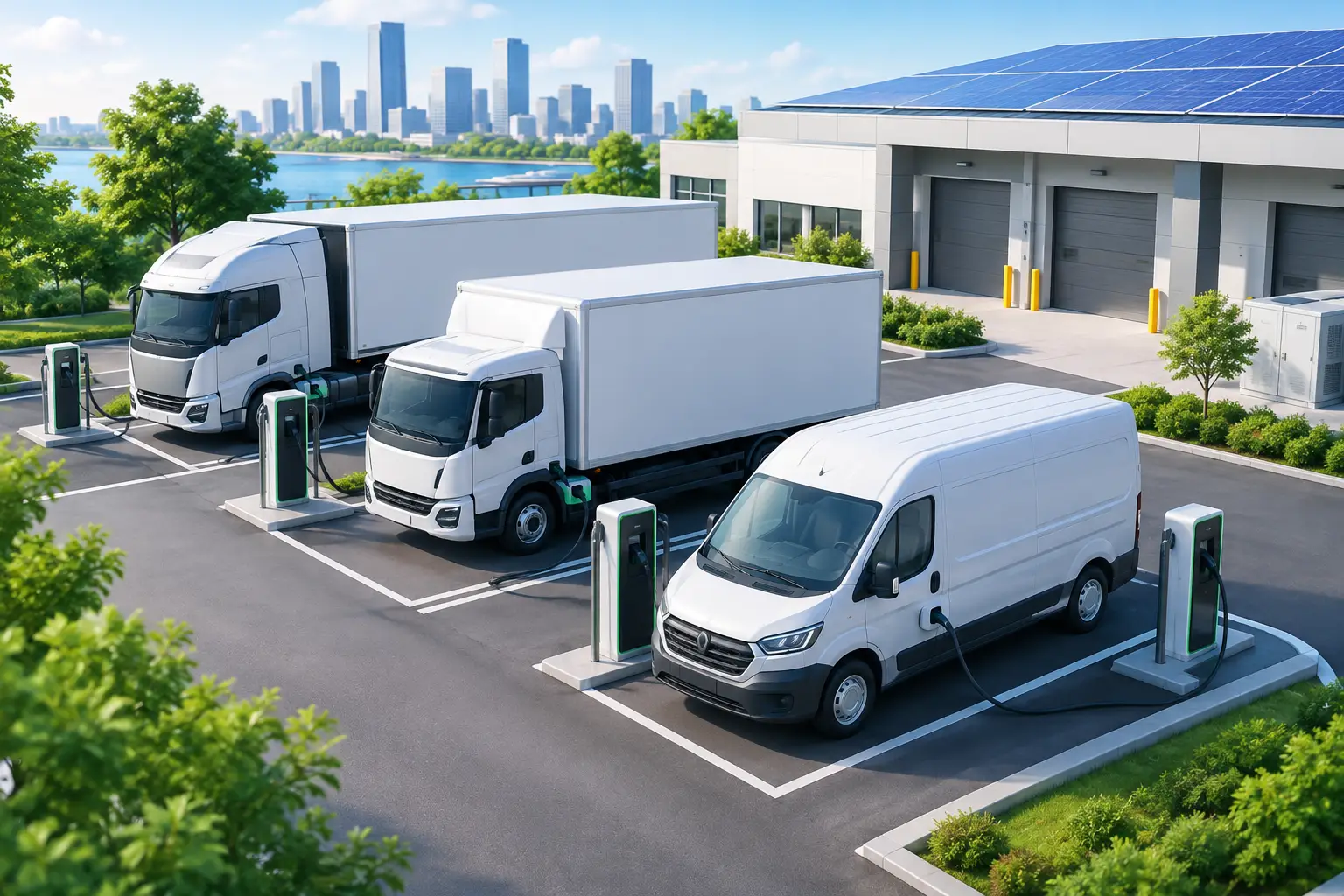
A work truck that cannot finish its route, run a lift gate, or reach the next job is not saving the business money. Commercial vehicle electrification can reduce fuel use, maintenance needs, and idling, but it has to match the way your fleet actually works. The right vehicle and charging plan can improve uptime. The wrong one can create a new kind of downtime.
For contractors, delivery operators, service companies, municipalities, and fleet owners, the question is not whether electric vehicles are available. The question is whether a specific vehicle can handle its daily workload without disrupting crews, customers, or schedules.
Start With the Route, Not the Vehicle
The first step is to look at the work your vehicles perform now. A light-duty service truck that returns to the same yard every evening has very different electrical needs than a heavy-duty truck running long highway routes, towing equipment, or working from remote job sites.
Track actual daily miles, idle time, stops, payload, towing weight, time parked at the yard, and seasonal operating conditions. Do not base the decision on a driver’s best-case day. Base it on the demanding days when the truck is loaded, air conditioning is running, traffic is slow, and an extra service call comes in late.
Many local fleets are good candidates for early electrification because their routes are predictable. Delivery vans, municipal vehicles, maintenance trucks, campus fleets, and some contractor vehicles may return to a central location nightly. That makes overnight charging practical and reduces dependence on public charging.
Long-distance hauling, heavy towing, and equipment that stays on remote jobsites require more planning. Range drops when payload rises, trailers are attached, speeds increase, temperatures climb, or auxiliary equipment draws power. In those applications, a diesel vehicle may remain the better operational fit for now. A mixed fleet is often more practical than replacing every vehicle at once.
Charging Is Part of the Fleet, Not an Add-On
A commercial electric vehicle is only as useful as the charging setup behind it. Before ordering trucks or vans, determine where they will charge, how long they will be parked, and whether the facility’s electrical service can support the load.
Level 2 charging is often a workable solution for vehicles that sit overnight. It can restore enough range for many local and regional routes without requiring drivers to spend time at a public fast charger. DC fast charging can reduce charging time, but it may require significant electrical upgrades, higher installation costs, and careful demand management.
For a small fleet, the issue may be simple: install a few properly sized chargers at the yard. For a larger operation, charging becomes a scheduling and infrastructure project. If ten vehicles plug in at the same time, the facility may face peak-demand charges or exceed available capacity. Smart charging controls can stagger charging times so vehicles are ready when needed without placing unnecessary strain on the electrical system.
Jobsite charging is another consideration. A work truck that spends all day at a fixed location may be able to charge there, but temporary power, access, safety, and site responsibility all need to be clear. A truck that moves between jobsites should not depend on charging that may or may not be available.
For fleets operating across the Florida Panhandle, heat, storm preparation, and power interruptions should also be part of the plan. Charging equipment needs to be installed correctly, protected from damage, and supported by an outage plan when vehicles are essential to emergency response or daily operations.
Commercial Vehicle Electrification Changes Maintenance
Electric vehicles eliminate several routine diesel and gasoline service needs. There are no oil changes, spark plugs, exhaust aftertreatment systems, or many of the moving engine components found in conventional vehicles. Regenerative braking can also reduce brake wear in stop-and-go use.
That does not mean electric fleet vehicles are maintenance-free. Tires, suspension, steering, brakes, cooling systems, doors, lift gates, trailers, hydraulic equipment, and body components still need regular inspections and repair. Commercial vehicles still carry loads, hit rough jobsites, operate in rain and heat, and accumulate wear.
The maintenance focus also changes. High-voltage battery systems, cables, connectors, inverters, cooling circuits, charging ports, and electronic controls require technicians who understand the equipment and follow proper safety procedures. Electrical faults can take a vehicle out of service just as quickly as a fuel-system or engine problem if they are not diagnosed correctly.
A preventive maintenance program should include both the vehicle and the charging equipment. Inspect charge cables for damage, keep connectors clean and dry, monitor charger error messages, and document repeated faults. A charger that works intermittently can create a next-morning breakdown before the vehicle even leaves the yard.
Upfitting Must Be Planned Early
Service bodies, ladder racks, cranes, lift gates, air compressors, refrigeration units, and hydraulic systems all affect the electrification decision. Some equipment can be powered through the vehicle battery system, while other setups may need a separate power source or a different vehicle configuration.
Do not treat upfitting as an afterthought. Added weight reduces available payload and can affect range. Auxiliary power demand can reduce the energy available for driving. The vehicle manufacturer, upfitter, and fleet maintenance team need to agree on the final configuration before the vehicle goes into service.
Measure Total Cost, Not Just Purchase Price
Electric commercial vehicles often cost more up front than comparable conventional vehicles. Charging equipment, electrical upgrades, and vehicle upfitting can add to the initial investment. Those costs are real, and a fleet should account for them before making a commitment.
The operating side may look better over time. Electricity can cost less per mile than gasoline or diesel, especially when vehicles charge at the fleet yard during lower-cost periods. Reduced oil service, fewer engine-related repairs, and lower brake wear may also lower maintenance expenses.
The answer depends on utilization. A vehicle that drives predictable daily miles and charges overnight can deliver better economics than a vehicle that sits unused for long periods or relies on expensive public fast charging. Downtime has to be included in the calculation as well. If charging delays affect billable work, missed revenue can erase fuel savings quickly.
When comparing options, use your own numbers: fuel consumption, current repair history, labor rates, route miles, idle hours, utility rates, payload needs, and expected vehicle life. Manufacturer range estimates are useful, but they are not a substitute for fleet data.
Train Drivers and Dispatch Before Rollout
Drivers need clear instructions on charging, range management, warning messages, and how to report a problem. Dispatch needs to know which routes fit which vehicles. Maintenance personnel need access to vehicle-specific service information and safety procedures.
The change does not need to be complicated, but it does need to be organized. A driver should not arrive at a jobsite with a low state of charge because the vehicle was assigned to an unexpected route or was not plugged in overnight. Simple checklists, charging assignments, and daily vehicle status checks prevent many avoidable issues.
Start with a pilot group instead of converting the entire fleet at once. Choose vehicles with consistent routes and drivers who will provide useful feedback. Track energy use, charging time, missed assignments, maintenance events, and actual cost per mile for several months. That data will show whether expansion makes sense and where the operation needs adjustment.
Where Mobile Service Still Matters
Electrification does not eliminate roadside and onsite repair needs. Tires go flat, brakes wear, trailers need service, lift gates fail, wiring gets damaged, and suspension components break. Conventional vehicles will also remain part of many commercial fleets for years, especially where range, payload, towing, and remote work make diesel the practical choice.
A fleet maintenance plan should support both technologies during the transition. Mobile Fleet Services can help keep work trucks, diesel equipment, trailers, and conventional fleet vehicles maintained at the yard, jobsite, or roadside while fleet owners evaluate where electric vehicles fit.
The best first move is not to replace every truck. It is to identify one repeatable route, one dependable charging location, and one vehicle application where the numbers support the change. When the operating plan is right, electrification becomes a working fleet decision instead of an expensive experiment.
