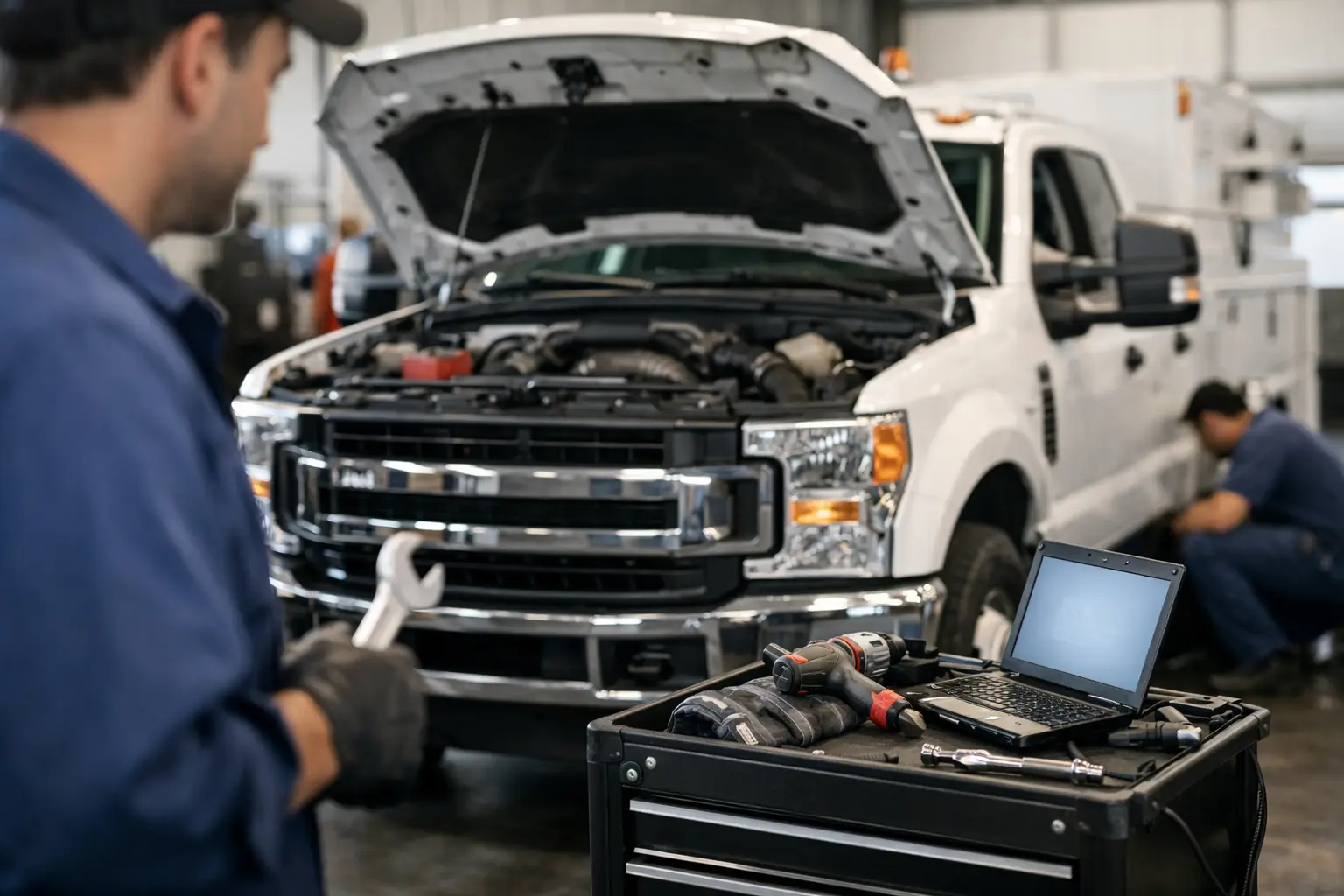
A work truck that will not start at 6:30 a.m. can idle an entire crew before the first job begins. For contractors, delivery operators, and fleet managers, automotive repair is not simply a vehicle expense. It is a direct part of keeping people, equipment, schedules, and customer commitments moving.
The best repair decision is rarely just about fixing the immediate failure. It is about identifying what caused it, determining whether other vehicles face the same risk, and getting the truck back to work without creating another preventable breakdown next week.
Automotive Repair Is a Downtime Decision
A personal vehicle can often wait in a shop for a day or two. A commercial work truck, service van, or delivery vehicle often cannot. When it is down, a crew may be waiting on tools, materials may not reach the job site, and another vehicle may be pulled away from scheduled work to cover the gap.
That is why fleet-focused automotive repair should start with the operational problem. Is the truck safe to drive? Is it capable of finishing today's route? Is the issue isolated, or does it point to a maintenance problem across several similar units? Clear answers help owners make faster decisions without guessing.
Mobile service changes the equation when the vehicle is sitting at a job site, fleet yard, customer location, or roadside. Instead of arranging a tow and losing time in a repair shop queue, a technician can inspect the vehicle where it stopped. Not every repair can be completed on-site, but many common issues can be diagnosed and handled without moving the truck first.
Problems That Should Not Wait
Some failures are obvious. A no-start condition, a brake warning light, overheating, or a damaged tire can take a truck out of service immediately. Other problems look minor until they become expensive.
Repeated battery failures, slow cranking, dim lights, intermittent warning lights, and electrical accessories that stop working can point to charging-system issues, damaged wiring, poor connections, or parasitic battery drain. Replacing the battery without testing the system may get the vehicle running temporarily, but it does not always fix the cause.
Brake concerns deserve the same urgency. Grinding, pulling, vibration, a soft pedal, or longer stopping distance should be inspected promptly. On a loaded work truck or vehicle towing a trailer, brake performance affects the driver, the public, the cargo, and the company's liability.
Cooling-system issues also escalate quickly in Florida heat. Low coolant, leaks, a weak fan, a failing thermostat, or a restricted radiator can lead to overheating. Continuing to run an overheating engine can turn a manageable repair into major engine damage. Stopping early is usually less disruptive than replacing an engine later.
Warning Lights Need Diagnosis, Not Guesswork
A check engine light does not provide a repair instruction. It indicates that the vehicle's computer has identified a fault or operating condition outside its expected range. The code is a starting point, not a final answer.
Professional diagnostics combine fault codes with test results, wiring checks, sensor data, and a visual inspection. This matters because the same code can be caused by a failed component, a wiring fault, an air leak, a voltage problem, or a mechanical issue. Guessing with parts can consume time and money while the real problem remains.
For mixed fleets, this approach is especially valuable. Gas work trucks, diesel trucks, vans, trailers, and equipment may have different systems, but they all benefit from accurate diagnosis before repair work begins.
Build a Repair Plan Around the Vehicle's Job
The right repair strategy depends on how the vehicle is used. A pickup that runs between supply houses has different needs than a box truck making daily deliveries or a service truck carrying compressors, welders, ladders, and tools.
Vehicle load, idle time, towing, stop-and-go routes, off-road job sites, and driver habits all affect wear. A truck that appears to have low mileage may still need more frequent service if it spends long hours idling or working under load. Maintenance schedules based only on mileage can miss that reality.
A practical plan tracks the items most likely to cause interruption: oil and fluid condition, filters, brakes, tires, batteries, belts, hoses, lights, suspension components, and basic electrical performance. For diesel vehicles, emissions systems, fuel delivery, and DPF-related concerns also need attention before they force derate conditions or no-start events.
The goal is not to replace every part early. It is to inspect regularly enough to plan repairs before a component fails during a route, on a job site, or while pulling a load.
Preventive Maintenance Reduces Emergency Calls
Emergency repairs will happen. Road hazards, unexpected component failures, and heavy use are part of commercial vehicle operation. But many emergency calls begin with conditions that were visible earlier: a small coolant leak, worn brake pads, a weak battery, damaged trailer wiring, or a warning light that was ignored because the truck still drove.
Preventive maintenance gives fleet owners more control over timing. A vehicle can be serviced during planned downtime, parts can be ordered before the failure, and repairs can be scheduled around workloads. That is usually easier and less costly than responding to a breakdown in the middle of a busy day.
Consistency matters more than a complicated program. Keep service records for each unit, record the date and mileage of work performed, and note recurring issues. If three trucks have the same battery problem or trailer-light failure, the pattern may reveal a broader issue with equipment setup, wiring practices, operating conditions, or inspection routines.
Driver Checks Make a Real Difference
Drivers do not need to be technicians to catch problems early. A short walk-around before leaving can identify low tires, fluid leaks, damaged lights, loose trailer connections, cracked hoses, or body damage that may affect safe operation.
Drivers should also report changes, not just failures. A new vibration, delayed shift, unusual smell, hard start, brake pull, or warning light is useful information. The earlier it is reported, the more options there are for scheduling the repair.
When Mobile Automotive Repair Is the Better Option
Mobile repair is a strong fit when moving the vehicle creates additional delay or cost. A no-start truck at a fleet yard, a work vehicle at a job site, or a trailer with lighting or brake concerns may be more efficiently handled where it sits.
On-site service can support diagnostics, battery and charging-system work, brake service, electrical repairs, preventive maintenance, trailer repairs, lift gate service, and many other routine or urgent needs. The exact repair depends on the condition of the vehicle, parts availability, weather, access, and whether the work can be completed safely in the field.
There are times when a shop repair is the better choice. Major engine work, extensive transmission repairs, alignment work, or repairs requiring specialized lifting equipment may need a controlled shop environment. A dependable service provider should be direct about that distinction rather than attempting a field repair that is not appropriate.
For businesses operating from Mexico Beach through Fort Walton Beach and within the Panama City service area, mobile support can reduce the time lost between a breakdown and the first diagnostic step. That speed is valuable when a vehicle is tied to a crew, a route, or a scheduled delivery.
Choose Repair Support That Understands Fleet Priorities
Commercial automotive repair requires more than basic mechanical knowledge. The technician needs to understand that a vehicle may carry specialized tools, pull a trailer, support a crew, or represent a time-sensitive customer commitment.
Look for clear communication about the issue, recommended repair, parts needed, and whether the vehicle is safe to operate. The best service process does not bury the customer in jargon. It explains what failed, what should be repaired now, what can be monitored, and what may need to be planned next.
Mobile Fleet Services approaches repair with that practical focus: diagnose the problem accurately, complete appropriate repairs on-site when possible, and help keep working vehicles from becoming schedule disruptions.
A truck rarely chooses a convenient time to fail. The businesses that stay ahead are the ones that treat small changes as useful warning signs, schedule maintenance before it becomes urgent, and have repair support ready when work cannot wait.
